100 Things to Declutter Right Now (and the Rule Behind Each One)
The easiest things to declutter are the ones that need no real decision: things that are broken, used up, or duplicates of something you already use. Start there. Below is a list of 100 things to declutter, room by room. Each item has a tag that tells you why it can go, so you can use the same rule on things that aren’t on the list.
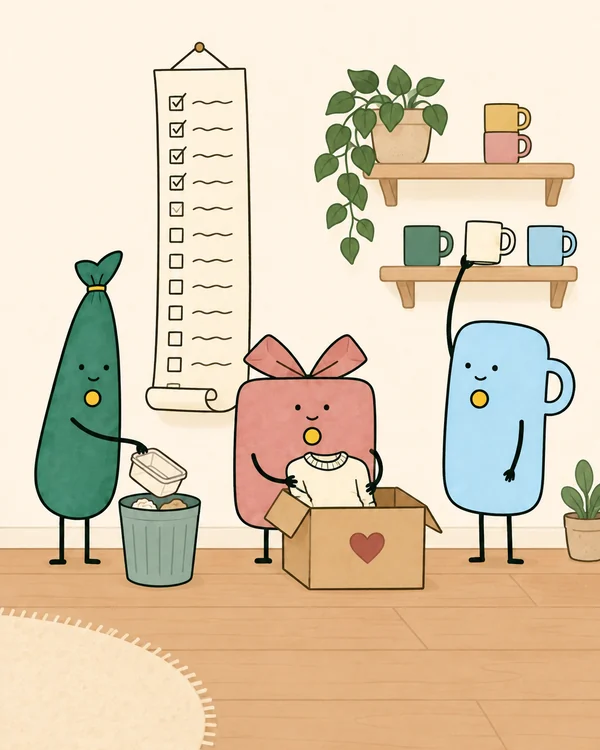
Not sure where to begin at all? Our guide on where to start decluttering walks you through a first 15-minute session. Where each item goes (trash, donate, recycle, drop-off) is covered in our room-by-room decluttering checklist.

The six rules behind the list
Every item below has one of these tags. The first two are plain common sense; the other four come from well-known decluttering authors.
- Broken: it doesn’t work, and you won’t fix it.
- Used up: empty, dried out, stale, or expired.
- Duplicate: you have more than you use. Dana K. White asks: “If I needed this item, would it occur to me that I already had one?” If not, the extras aren’t doing their job. She also treats the shelf or drawer as the limit: “Purge Down to the Limits of the Container.”
- Unused: The Minimalists’ 90/90 rule. “Have you used that item in the last 90 days? If you haven’t, will you use it in the next 90?” They say you can stretch the window (“Maybe it’s 120. Maybe it’s six months.”).
- Just in case: The Minimalists’ 20/20 rule: “Anything we get rid of that we truly need, we can replace for less than $20 in less than 20 minutes from our current location.” They say it “likely works 99% of the time for 99% of all items and 99% of all people.” A caveat of our own: don’t apply it to things you can’t easily replace, such as documents, family keepsakes or medicine you still take.
- Elsewhere: it isn’t clutter, it’s just in the wrong room. Dana K. White calls this “easy stuff”: things that have “an established home somewhere else.” Put them back now.
Two more marks:
- $ means it’s the kind of thing people often try to sell. That’s our general guess, not a promise that it will sell or what it’s worth. See Things to declutter and sell before you list anything.
- ⚠ means don’t just toss it in the trash. Follow the linked guidance, or see the full notes in our decluttering checklist.
We picked the 100 items ourselves, from the usual trouble spots. They don’t come from any one author.
10 things to declutter right now
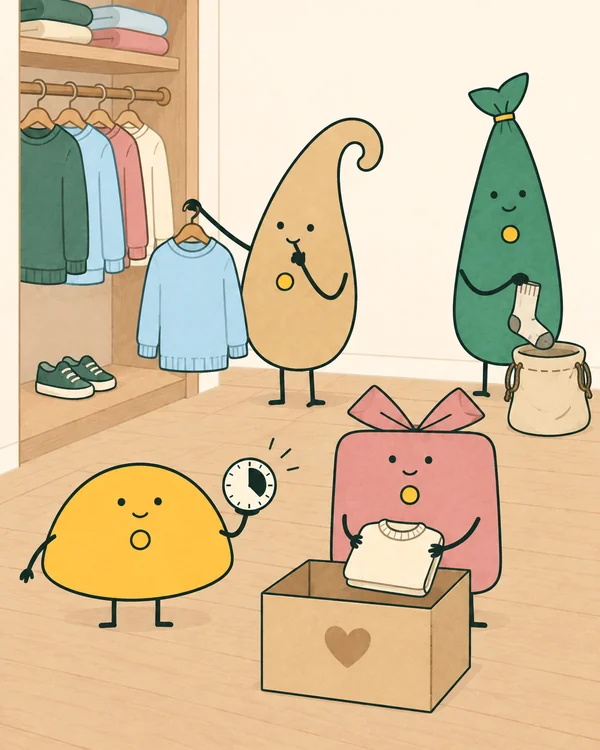
Nothing here needs sorting or second-guessing, so these go fastest. Grab a trash bag and a donate box.
- Food storage containers without lids (#1)
- Stale open snacks (#16)
- Expired sunscreen (#17)
- Old toothbrushes (#22)
- Socks without a pair (#31)
- Magazines and catalogs (#45)
- Umbrellas that don’t open (#56)
- Dried-out pens and markers (#63)
- Toys with missing pieces (#73)
- Trash and receipts in the car (#93)

Kitchen and pantry (1–16)
- Food storage containers without lids, and lids without containers: Broken
- Chipped or cracked mugs and plates: Broken
- Mugs and glasses beyond what fits on the shelf: Duplicate
- Extra spatulas, ladles and can openers: Duplicate
- Single-purpose gadgets you haven’t touched in months: Unused $
- Small appliances you don’t use: Unused $
- Extra water bottles and travel mugs: Duplicate
- Takeout menus: Unused
- Sauce packets and plastic cutlery from takeout: Just in case
- Worn-out dish towels and sponges: Used up
- Pots and pans with loose or broken handles: Broken
- Cookbooks you don’t cook from: Unused $
- Plastic grocery bags beyond what fits in one bag: Just in case
- Rubber bands, twist ties and mystery keys in the junk drawer: Just in case
- Serving dishes for parties you don’t host: Unused $
- Stale open snacks, crackers and cereal: Used up
Bathroom (17–28)
- Expired sunscreen: Used up. The FDA says a sunscreen without an expiration date “should be considered expired three years after purchase.”
- Old mascara: Used up. The FDA notes that “manufacturers usually recommend discarding mascara two to four months after purchase.”
- ⚠ Expired medicines, or medicines you’ve stopped using: Used up. See the FDA’s disposal guidance (take-back first). Whether to stop taking a medicine is a question for your doctor or pharmacist, not for a decluttering list.
- Hotel toiletries and samples you won’t use: Just in case
- Nearly empty bottles: Used up
- Old toothbrushes: Used up
- Hair tools you don’t use: Unused $ (⚠ if it has a built-in rechargeable battery)
- Makeup shades you never wear: Unused
- Nail polish colors you never wear: Unused
- Towels with holes: Broken
- Hair ties and clips beyond one small container: Duplicate
- Lotions and perfumes you don’t like the smell of: Unused
Bedroom and closet (29–44)
- Clothes that don’t fit you now: Unused $
- Clothes with stains, holes or broken zippers you won’t fix: Broken
- Socks without a pair: Broken
- Worn-out underwear and bras: Used up
- Shoes that hurt: Unused $
- Wire hangers from the dry cleaner: Duplicate
- Bags and purses you don’t carry: Unused $
- Broken or tangled jewelry you’ll never fix: Broken
- Belts that don’t fit: Unused
- Free event T-shirts you never wear: Unused
- Formal wear for events long past: Unused $
- Bedding for beds you no longer have: Unused
- Pillows beyond what the beds need: Duplicate
- Nightstand clutter: dead pens, old receipts, empty boxes: Used up
- Books you’ve finished and won’t reread: Unused $
- Under-bed bins you haven’t opened in a year: Unused

Living room (45–54)
- Magazines and catalogs: Used up
- DVDs and CDs you don’t play: Unused $
- Video games and old consoles: Unused $ ⚠ (delete personal data first, see #71)
- ⚠ Remotes for devices you no longer own: Broken (take the batteries out)
- Throw pillows beyond what the sofa holds: Duplicate
- Blankets beyond what you actually use: Duplicate
- Decor you keep moving around but don’t like: Unused $
- Candles burned down to the bottom: Used up
- Faded or dusty fake plants: Broken
- Board games with missing pieces: Broken
Entryway (55–62)
- Keys you can’t match to a lock: Broken
- Umbrellas that don’t open: Broken
- Reusable shopping bags beyond what fits on the hook: Duplicate
- Shoes nobody wore this season: Unused $
- Gloves without a pair: Broken
- Coats nobody wears: Unused $
- ⚠ Junk mail and flyers: Used up (shred anything with personal information)
- Things that belong in another room: Elsewhere
Home office and paper (63–72)
- Dried-out pens and markers: Used up
- Manuals for things you no longer own: Unused
- Expired coupons and gift offers: Used up
- ⚠ ATM receipts: Used up. The FTC lists them among the papers to shred.
- ⚠ Expired credit cards and IDs: Used up. Shred them (FTC, same page).
- ⚠ Offers of credit or insurance: Unused. Shred them (FTC, same page).
- ⚠ Bank statements older than a year: Used up. The FTC’s general rule is to keep them for one year; hold on longer if you need them for taxes.
- ⚠ Cables and chargers for devices you no longer own: Unused
- ⚠ Old phones and tablets: Unused $. Before you donate or recycle electronics, the EPA says to “delete all personal information.”
- Extra staplers, tape and sticky notes beyond one drawer: Duplicate
Kids and toys (73–80)
- Toys with missing pieces: Broken
- Toys your kids have outgrown: Unused $ (check for recalls before selling, see below)
- Kids’ clothes that don’t fit: Unused $
- Party favors and fast-food toys: Just in case
- Dried-out markers and glue sticks: Used up
- ⚠ A full-size crib made before June 28, 2011: see the note on cribs before you sell or donate it
- ⚠ An outgrown car seat: check NHTSA’s used car seat checklist before you pass it on
- Board books and picture books they’ve outgrown: Unused $
Garage, laundry room and storage (81–92)
- ⚠ Leftover paint you won’t use: Unused. The EPA counts paint as household hazardous waste; ask your local solid waste agency about collection days.
- ⚠ Old cleaners you don’t use: Unused (same EPA page)
- Tools you have two of: Duplicate $
- Sports gear nobody uses: Unused $
- Holiday decor you didn’t put up last year: Unused
- Empty boxes saved “for moving” or for returns: Just in case
- Stiff paint brushes and rollers: Used up
- Jars of loose screws and nails beyond one jar: Just in case
- Damaged extension cords: Broken
- Exercise equipment you don’t use: Unused $
- ⚠ Loose old batteries in a drawer: Used up. The EPA says lithium-ion batteries and devices that contain them “should NOT go in household garbage or recycling bins.”
- Luggage you don’t travel with: Unused $
Car (93–100)
- Trash and receipts in the door pockets: Used up
- Expired insurance cards (keep the current one): Used up
- Extra car chargers: Duplicate
- Napkins and ketchup packets: Just in case
- CDs and paper maps you don’t use: Unused
- Toys, cups and jackets that belong in the house: Elsewhere
- Air fresheners that have run out: Used up
- Sunglasses that are broken or scratched: Broken
Things to declutter and sell
Selling can turn clutter into a little cash. It can also turn it into a pile that sits by the door for months. A rule of thumb of our own: sell it only if you’d be annoyed to give it away for free, and set a date. Whatever hasn’t sold by then goes in the donate box.
Before you list anything:
- Check for recalls. The Consumer Product Safety Commission (CPSC) says “It is unlawful to offer recalled products for sale” and tells sellers to “check cpsc.gov/recalls before listing your product for sale.” Its rules apply to “people holding yard sales and flea markets”, not only to stores.
- Nursery items. The CPSC says: “Do not sell any broken or wobbly nursery furniture or durable infant product that is missing parts, even if it has not been recalled.”
- Old cribs. For full-size cribs made before June 28, 2011, the CPSC tells retailers to destroy them and not resell them “unless the seller has written proof that the crib meets the applicable requirements.” That guidance is written for businesses; our reading is that you should treat an older crib as not for resale.
- Car seats. According to NHTSA’s used car seat checklist, a seat should never have been in a moderate to severe crash. It should have labels with its date of manufacture and model number, no recalls, all of its parts, and its instruction book. If yours doesn’t pass, don’t pass it on.
- Phones, tablets, consoles, laptops. Delete your personal information first (EPA).

Donating instead? If you plan to deduct your donations on your taxes, IRS Publication 526 says that “generally” you must itemize deductions, and that you “can’t take a deduction for clothing or household items you donate unless the clothing or household items are in good used condition or better.” Tax rules have details and exceptions, so ask a tax professional if you’re unsure.
Prefer categories to rooms?
This list goes room by room. Marie Kondo’s method does the opposite: “tidy by category – not by location”, in this order: clothes, books, papers, komono (miscellaneous items) and sentimental items. For each thing she asks, “Does this spark joy?” If going room by room feels scattered, use the list above by category instead: all the clothing items first, then books, then paper.
When you’re not sure about an item
Put it back and move on. One item shouldn’t eat up your whole session. Or ask Dana K. White’s first decluttering question: “If I needed this item, where would I look for it? Take it there now.” And anything that isn’t on this list can go through the same six tags.
Quick recap
- Start with the no-decision items: broken, used up, duplicates.
- Use the tags to decide on everything else: Unused (90/90), Just in case (20/20), Elsewhere (put it back).
- Items marked ⚠ get special disposal. Follow the linked guidance.
- Selling? Check recalls first and give yourself a deadline.
- Donating? For a tax deduction, the IRS requires clothing and household items to be in good used condition or better.

Sources
- Dana K. White, 5 Steps for Working Through an Overwhelming Mess (PDF), A Slob Comes Clean: https://www.aslobcomesclean.com/wp-content/uploads/2018/03/DASL-5-Steps-to-Working-Through-Mess.pdf
- The Minimalists, “The 90/90 Rule”: https://www.theminimalists.com/ninety/
- The Minimalists, “The 20/20 Rule”: https://www.theminimalists.com/jic/
- KonMari, “About the KonMari Method”: https://konmari.com/about-the-konmari-method/
- U.S. Consumer Product Safety Commission, “Stopping the Online Sale of Recalled Products”: https://www.cpsc.gov/Business--Manufacturing/Business-Education/ResaleThrift-Stores-Information-Center/Stop-Online-Sale-of-Recalled-Products
- U.S. Consumer Product Safety Commission, “Resale/Thrift Stores” FAQ: https://www.cpsc.gov/FAQ/ResaleThrift-Stores
- U.S. Consumer Product Safety Commission, “Full-Size Baby Cribs” FAQ: https://www.cpsc.gov/FAQ/Full-Size-Baby-Cribs
- National Highway Traffic Safety Administration, “Used Car Seat Safety Checklist”: https://www.nhtsa.gov/car-seats-and-booster-seats/used-car-seat-safety-checklist
- Internal Revenue Service, Publication 526, “Charitable Contributions”: https://www.irs.gov/publications/p526
- U.S. Food and Drug Administration, “Sunscreen: How to Help Protect Your Skin from the Sun”: https://www.fda.gov/drugs/understanding-over-counter-medicines/sunscreen-how-help-protect-your-skin-sun
- U.S. Food and Drug Administration, “Shelf Life and Expiration Dating of Cosmetics”: https://www.fda.gov/cosmetics/cosmetics-labeling/shelf-life-and-expiration-dating-cosmetics
- U.S. Food and Drug Administration, “Where and How to Dispose of Unused Medicines”: https://www.fda.gov/consumers/consumer-updates/where-and-how-dispose-unused-medicines
- U.S. Environmental Protection Agency, “Household Hazardous Waste (HHW)”: https://www.epa.gov/hw/household-hazardous-waste-hhw
- U.S. Environmental Protection Agency, “Used Lithium-Ion Batteries”: https://www.epa.gov/recycle/used-lithium-ion-batteries
- U.S. Environmental Protection Agency, “Electronics Donation and Recycling”: https://www.epa.gov/recycle/electronics-donation-and-recycling
- Federal Trade Commission, “Protecting your personal information: Which documents to keep and which to shred”: https://consumer.ftc.gov/consumer-alerts/2025/06/protecting-your-personal-information-which-documents-keep-which-shred